
What Is the ESP32? Build a Connected IoT Device
Learn what the ESP32 does, how it connects to the cloud, and what it takes to grow from a simple prototype to a connected product.
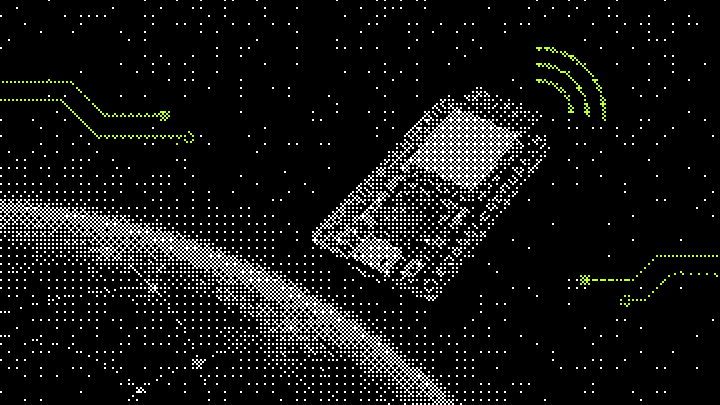
If you work with electronics, smart homes, or the Internet of Things, you will probably come across the ESP32 early on. This small board can read sensor data, connect to the internet, send information, and control equipment remotely.
The ESP32 is useful beyond a workbench prototype. With a suitable architecture, it can be part of a product that sends data to the cloud, can be monitored remotely, receives commands, and gets firmware updates without physical access.
This guide explains what the ESP32 is, how it works, and how to move from a basic ESP32 project toward a real IoT device.
What is the ESP32?
ESP32 is a family of chips and modules from Espressif Systems, designed for connected devices and IoT projects.
The original ESP32 combines features such as 2.4 GHz Wi-Fi, Bluetooth, a processor, power management, and hardware interfaces in one chip. Models in the family have different specifications, processors, and wireless capabilities.
That combination suits projects that collect information from the physical world and communicate over a network. Put simply, an ESP32 can act as the brain of an IoT device.
Consider a temperature sensor:
Sensor, ESP32, internet, Flova IoT Platform, and dashboard
The sensor measures temperature. The ESP32 reads the value and sends it over Wi-Fi to a server or IoT platform. A user can view the reading on a dashboard or use it in an automation.
Why is the ESP32 popular for IoT?
Many features needed for a connected device fit into a small hardware platform. In addition to wireless connectivity, ESP32 boards provide interfaces such as GPIO, UART, SPI, and I2C. They can connect to sensors, displays, relays, and other peripherals.
Espressif's documentation describes applications ranging from smart homes and industrial automation to smart agriculture and low-power sensor hubs.
The software ecosystem is broad too. Depending on the project, developers can use the Arduino framework or ESP-IDF. Espressif documents both options, including Arduino support for ESP32.
How is ESP32 different from Arduino?
Many people start learning microcontrollers with Arduino. It is a good choice for learning electronics and building prototypes. Compared with a classic Arduino Uno, an ESP32 includes more connectivity for IoT projects.
Connecting a classic Arduino Uno to Wi-Fi usually requires additional hardware, while Wi-Fi is built into the ESP32. This can make a temperature monitor, remote control, smart home device, or online data logger simpler to build.
The ESP32 is not the right choice for every project. The best microcontroller depends on cost, power use, inputs and outputs, connectivity, and the conditions in which the product will operate.
Does Wi-Fi make an ESP32 device an IoT product?
Connecting to Wi-Fi alone does not make a complete IoT product. There is a difference between an internet-connected project and a real IoT product.
Suppose an ESP32 measures room temperature and displays the value on a web page. That is a useful prototype. A product raises more questions: Where is the data stored? What happens with 100 or 10,000 devices? How is each device identified? How do users see their own devices and manage access? How can faulty firmware be updated remotely? How will automations use the data?
This is where the Flova IoT Platform can fit into the architecture.
Architecture for an ESP32 IoT device
Imagine building a monitoring system for a cold room. An ESP32 connects to a temperature sensor, reads a new value every few seconds, and sends it over the internet to the Flova IoT Platform.
The platform needs more than the number itself. It needs to know which device sent it, what kind of value it is, when it was recorded, and who can access it.
A simplified architecture looks like this:
Temperature sensor, ESP32, internet, Flova IoT Platform, Datastream, dashboard, and automation
The ESP32 interacts with the physical world. The platform manages, stores, displays, and processes the data.
What is a Datastream?
Suppose a device sends three values: room temperature, humidity, and cold-room door status. Each value is a separate data stream. Flova organizes these streams so the system knows what each value represents.
For example, a Device Template called “Cold Room Monitoring System” can define Datastreams for Temperature, Humidity, and Door Status. If a team later builds hundreds of similar devices, their data structure is already defined and manageable.
What does a dashboard do?
Storing data in a database is not enough for the people using a product. They need to see the device's status.
A cold-room manager might want the current temperature, a chart of its changes, the door status, and the device's last connection time on one page. An IoT dashboard presents the data in a form people can understand.
Flova dashboards can display device data so teams can check the system without inspecting each device directly.
Automation: when devices do more than send data
An IoT system can respond to data. If a cold room should stay below 8 degrees, a rule can create an event when this condition is true:
Temperature > 8°C
The system can then send an alert or start another operation. Nobody needs to watch the chart continuously. The device produces data and an automation responds to it.
IoT can therefore go beyond remote monitoring and support automated systems.
What is OTA, and why does it matter for ESP32?
Imagine selling 500 ESP32 devices and finding a firmware bug a few months later. Collecting every device and installing a new version with a cable is rarely practical.
OTA (Over-the-Air) updates let teams update device firmware remotely. It may not seem essential during a prototype, but firmware management and releases become an important part of a product's lifecycle as more devices are installed.
What do you need for a first ESP32 IoT project?
For a simple monitoring project, you need an ESP32 development board, a sensor suited to the project, Wi-Fi, firmware that reads and sends data, and an IoT platform such as Flova to receive, manage, and display the information.
There is no need to build a complex system on day one. Choose an architecture that can grow without forcing a complete redesign as the device count increases.
From prototype to production
Seeing the first reading on a dashboard is an exciting step, but it is only the start of a real product.
As one device becomes 100 and then 1,000, device management, authentication, security, device health monitoring, user management, data retention, OTA, and scaling all matter.
Teams can build this infrastructure themselves, but doing so adds development time and cost. IoT platforms exist to handle these common parts of the problem.
What does Flova handle?
The Flova IoT Platform helps connect a physical device to a product that people can use.
Instead of designing device management, Datastreams, dashboards, automation, OTA, and backend services separately for each project, teams can spend more time on the device and the product itself.
A simplified Flova architecture looks like this:
ESP32, Flova, Datastreams, dashboards, and automations
The ESP32 gathers information from the physical world, while Flova provides infrastructure to manage and use that data. Turning on an LED over the internet is a small example; a product also needs device, data, and firmware management.
In summary
The ESP32 is a popular starting point for IoT because connected devices often need processing and wireless communication, and the ESP32 provides both.
But an ESP32 alone is not an IoT product. A complete product connects these layers:
Physical world, sensor, ESP32, internet connection, Flova IoT Platform, data, dashboard, and automation
As a project grows, cloud services and device management become more important. The ESP32 can be a good starting point, while a platform such as Flova can provide infrastructure as a project grows into a product.
Flova: Build, connect, and manage your connected products.